What Makes a Building Material Environmentally Responsible?
Environmental responsibility starts with how natural resources are used and whether they can continue to support future generations. Two terms are especially important:
- Renewable: A resource that can be replenished through natural processes, provided it is used at a responsible rate.
- Sustainable: A resource or practice that can continue over time without exhausting the resource or creating unacceptable environmental harm.
These ideas are useful when evaluating greenwashing, which occurs when a product’s environmental benefits are overstated or presented without important context. For example, precast concrete may use less energy or produce less waste than certain cast-in-place methods. That comparison alone does not establish that concrete is renewable. Its production still relies on mineral resources and energy-intensive processes.
Why Wood Is an Important Renewable Building Material
There are several materials used in environmentally conscious construction, including rammed earth, adobe, bamboo, cork, straw, hemp-based products, and cellulose. Their suitability depends on how they are produced, where they are available, and how they will be used.
Wood has a practical advantage: builders are familiar with it, the equipment and methods are widely understood, and it can be sourced for structural applications. When forests are responsibly managed, new trees can replace harvested timber. Wood also stores carbon during its service life and can sometimes be reused or repurposed after a structure is taken apart.
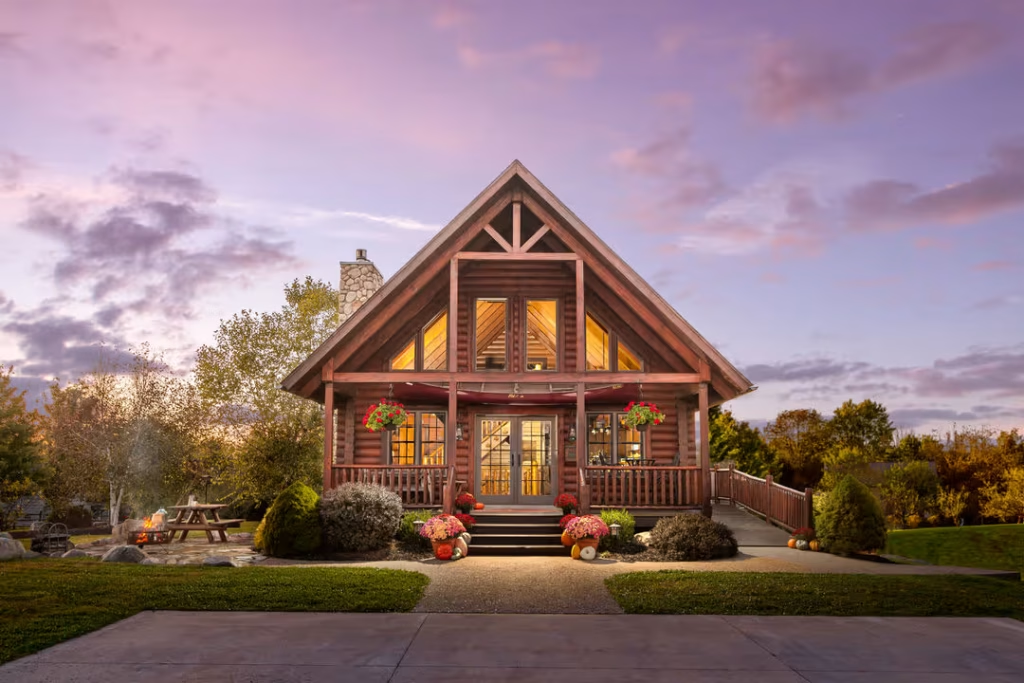
For homeowners interested in building with substantial solid timber, log home kits and construction packages provide a useful starting point for understanding the materials involved.
Log Homes vs. Conventional Homes: Renewable Material Comparison
A conventionally framed house uses wood, but many of its wall, floor, and roof assemblies also include gypsum board, synthetic insulation, and other manufactured materials. A log home uses larger amounts of solid wood in its exterior walls, floor framing, and interior finishes.
The following figures come from the author’s comparison of a representative log home and a conventional lightweight wood-framed home. Percentages describe the renewable share by volume of the specific assemblies analyzed; they are not universal figures for every home design.
| Building component | Log home | Conventional wood-framed home |
|---|---|---|
| Roof | 22.0% | 9.72% |
| Exterior walls | 96.42% | 17.76% |
| Floor framing | 100% | 76.38% |
| Interior walls | 100% | 32.28% |
| Total building shell | 51.4% | 18.9% |
In this comparison, renewable materials account for 51.4% of the log home’s shell, compared with 18.9% of the conventional home’s shell. The log home’s renewable share is approximately 2.7 times the conventional home’s share.
Roof Construction
The log home example uses 6-by-8-inch rafters spaced 48 inches on center, 1-by-6-inch tongue-and-groove decking, foam insulation, and shingles. The conventional example uses 2-by-12-inch rafters spaced 24 inches on center, gypsum board, batt insulation, OSB sheathing, and shingles. Under the author’s material-volume calculation, the log home’s roof contains 22.0% renewable material, compared with 9.72% for the conventional roof.
Exterior Walls
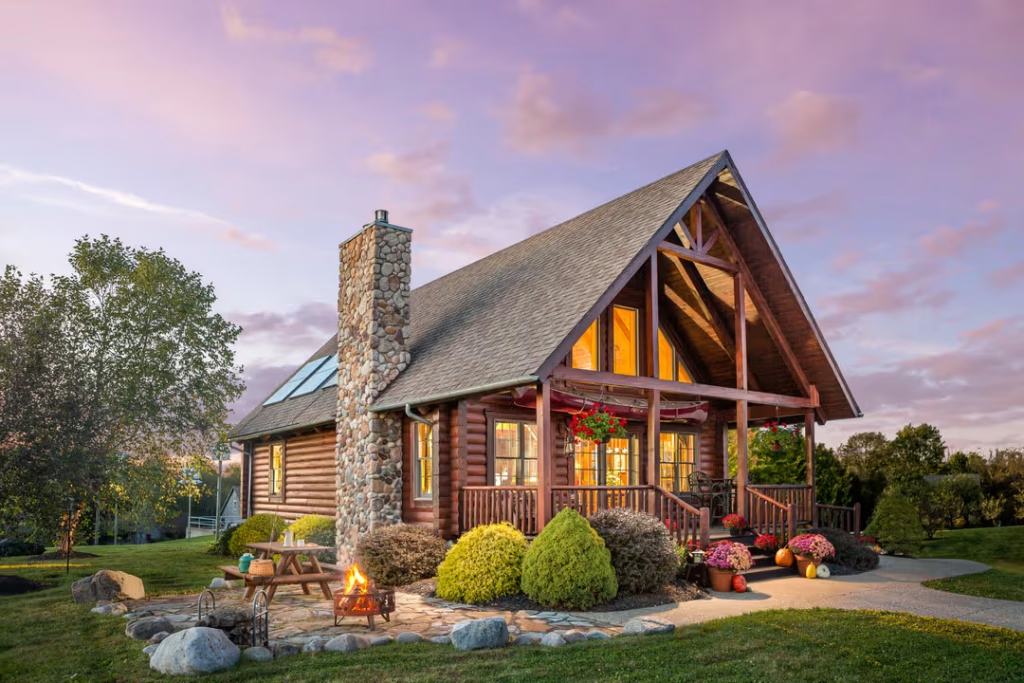
Exterior walls show the largest difference. The log home example uses solid 6-by-8-inch D-logs with gaskets and an air space, making the assembly 96.42% renewable by volume. The conventional wall assembly includes siding, OSB sheathing, 2-by-4-inch studs, batt insulation, and gypsum board, with a calculated renewable share of 17.76%.
Floor Framing and Interior Walls
The log home example uses substantial wood joists and tongue-and-groove decking for its floors, and wood framing with tongue-and-groove coverings for its interior walls. Both assemblies are calculated as 100% renewable by volume. The conventional home’s floor framing is calculated at 76.38% renewable, while its interior walls are 32.28% renewable.
How Material Choices Affect the Rest of a Log Home
These figures cover the basic building-shell materials in the comparison. They do not include windows, doors, finished flooring, trim, cabinetry, furnishings, or other elements of a completed home.
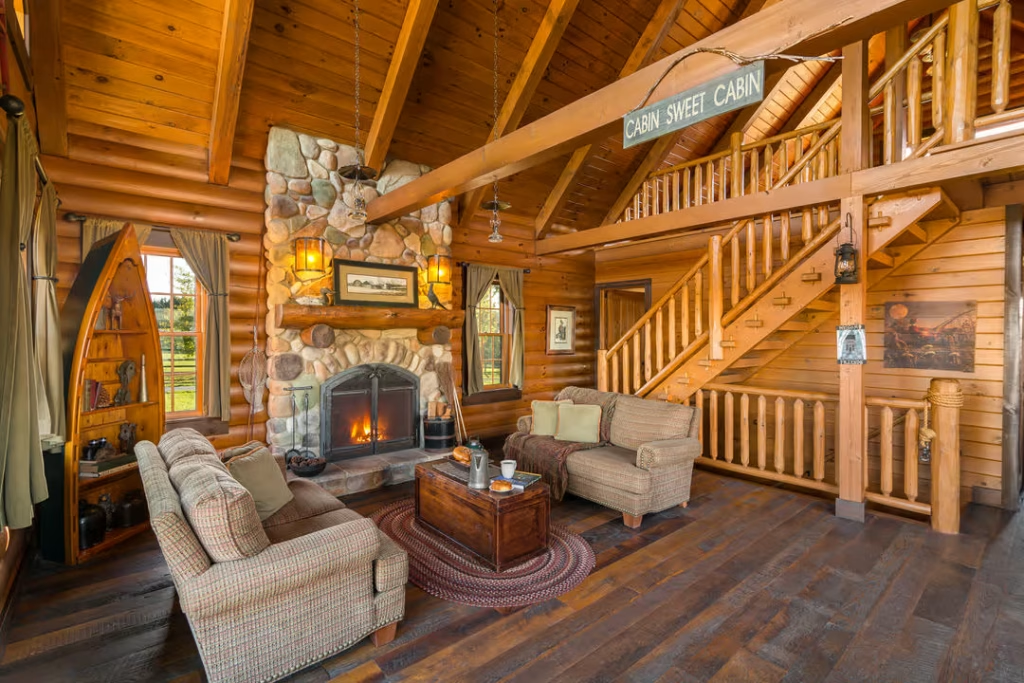
Those selections matter, too. Solid wood flooring, wood window and door components, and wood trim can increase a home’s use of renewable material. In contrast, vinyl, fiberglass, and some engineered finishes introduce materials with different resource and manufacturing profiles. The specific products chosen will determine the final mix.
Homeowners can see how exposed log walls and natural wood elements work together in completed projects in Hochstetler’s log home project gallery.
Are Log Homes Sustainable Over the Long Term?
Renewable material content is one important part of an environmentally responsible home. Other considerations include responsible forestry practices, the energy used to produce and transport materials, the home’s operating efficiency, maintenance, and the lifespan of the structure.
The article’s material comparison makes a strong case for log construction in terms of renewable material use. Energy performance is a separate question that depends on the complete building design, insulation, airtightness, and local conditions. To explore that part of the equation, read more about log home energy efficiency.
Choosing a Log Home Built With Renewable Materials
For homeowners weighing their environmental priorities, log construction offers a familiar, practical way to make greater use of wood. In the representative building-shell comparison above, a log home uses a substantially higher proportion of renewable material than conventional wood-frame construction.
As you plan your home, consider both the structural materials and the finishes you select. Browse Hochstetler’s log home floor plans for examples of different designs, or contact the Hochstetler team to discuss your project.