How Lenders View “Affordability”
Lenders look at your debt-to-income ratio (DTI)—your total monthly debt payments divided by your gross monthly income. A common underwriting guide is the 28/36 rule: aim for no more than ~28% of gross income on housing costs and ~36% on total debt (housing + all other monthly obligations). That 36% “back-end” number is a good planning guardrail even if a lender might approve more.
A simple step-by-step example
Let’s use round numbers similar to what we see with many owners:
- Combined Income: $150,000 per year gross → ÷12 = $12,500/month
- 36% guardrail: $12,500 × 0.36 = $4,500 max for all monthly debts
- Existing debts: say $900 (car, student loan, etc.) → $4,500 − $900 = $3,600
- Taxes & insurance (estimate): say $400 → $3,600 − $400 = $3,200 available for principal & interest on your construction/permanent loan
Now translate $3,200/month into a loan amount. That depends on interest rate and term:
- 20-year @ 5.00% → ≈ $485,000 loan
- 20-year @ 6.875% → ≈ $417,000 loan
- 30-year @ 6.875% → ≈ $487,000 loan
Use this mortgage calculator to plug in your own numbers.
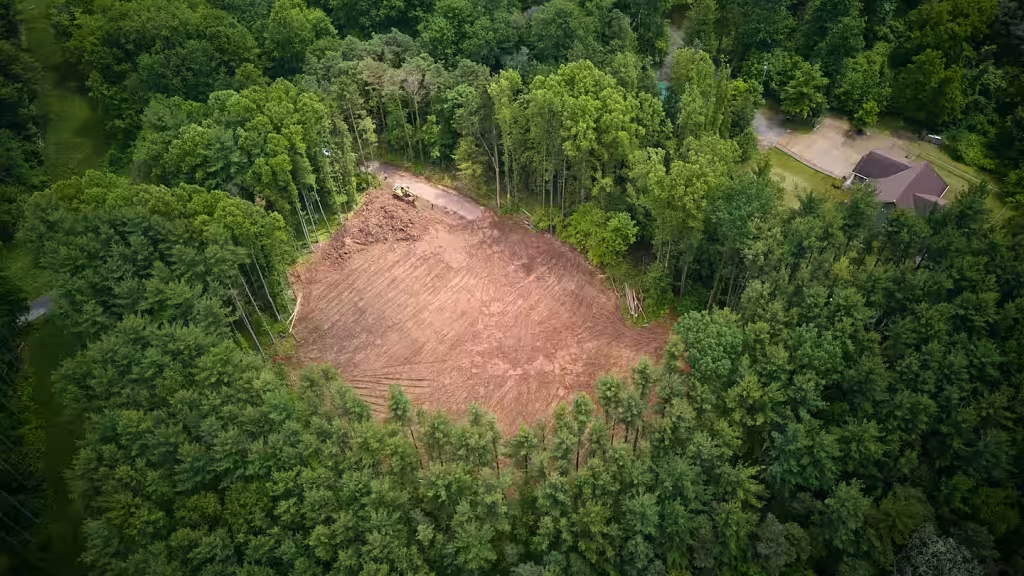
If you also have $200,000 set aside for a down payment, your project capacity is “loan amount + down payment,” minus an allowance for site costs (septic, well, driveway, utilities). In many rural builds, that site bucket can be significant. Get real numbers early. Typical ranges for septic, wells, driveways, impact/utility fees, and clearing vary widely by location.
Down payments: owner-builder vs. hired builder
If you’re acting as an owner-builder, expect lenders to be stricter and sometimes require the higher end of that range; some programs may allow less (or more) depending on credit, equity in land, VA/FHA/USDA program rules, and lender policy.
Tip: If you plan to GC your own home, discuss requirements with multiple local lenders and be prepared with detailed plans, specs, bids, and a credible schedule. Lenders will ask for construction drawings, specifications, and written cost estimates to evaluate the loan.