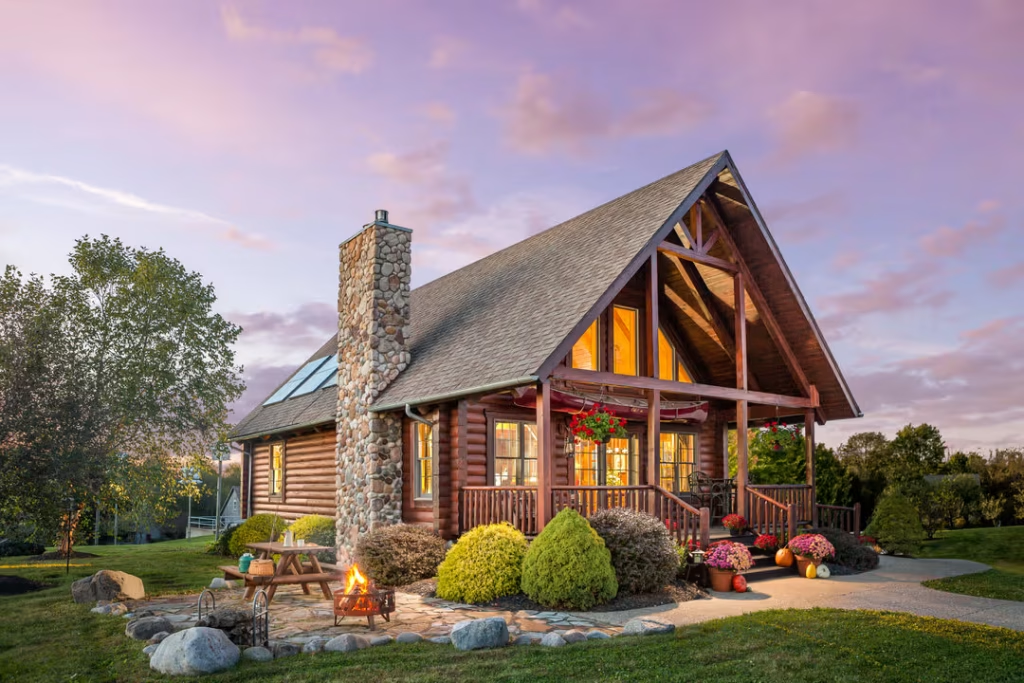
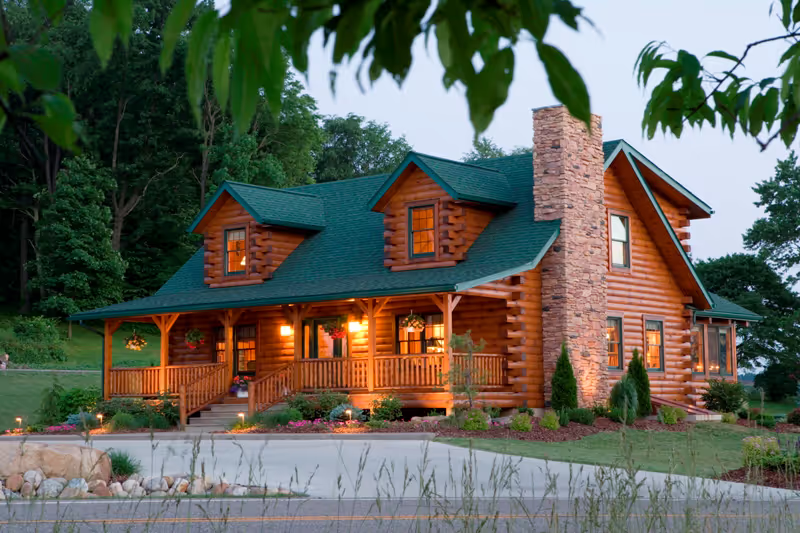
Here is the log home staining routine his crew follows and the signs he tells homeowners to watch for.
A Four-Step Log Home Maintenance Routine
Raber’s crew works in the same order on every home:
- Clean the logs.
- Fix any water leaks.
- Caulk open cracks.
- Apply oil-based stain.
He learned that routine on his own Hochstetler home, and he says even a brand-new log home should get the same treatment.
Caulk the Cracks That Catch Water
Logs settle and develop cracks, called checks, as they age. (For more on how drying affects a log, read how air-dried and kiln-dried logs compare.)
“As the logs settle and crack, fill every crack that’s tilted backward,” Raber says. Those openings catch rain. Caulking them keeps water from settling into the log and causing decay.
Preparing a New Log Home for Its First Stain
A new home needs prep before the first coat. Gentle pressure washing or sand blasting removes leftover milling glaze and dirt. It also opens the pores of the log surface so the wood accepts the stain.
Media Blasting Old Stain Off the Logs
On restoration jobs, crews usually blast the logs to strip dirt, mildew and old stain. “Sand blasting” is a misleading name: the media range from walnut shell grit to corn cob grit to baking soda.
Raber’s crew uses glass grit, which breaks down naturally and is gentler on the wood surface than some other media. They tarp around the house so they can collect most of the used grit.
Why the Crew Brushes Stain by Hand
Once the logs are clean, the crew brushes oil-based stain on by hand. Spraying puts stain on everything nearby.
“We don’t have to worry about customers’ cars, their concrete, windows… If we spray, we have to mask everything off,” Raber says. “We have our own lift and we just brush everything by hand.”
Oil-Based vs. Water-Based Log Stain
Raber uses oil-based stain because it saves time and materials. Water-based stains take more coats, and they dry fast in bright sunlight, which can leave the color uneven.
Oil-based stain also lasts longer on the logs. “You just get quite a bit more life out of it,” he says.
Signs Your Log Home Needs Restaining
Weather rarely hits every wall evenly. One or two walls usually fade first because they take the most sun and rain. Raber’s advice: call for a look before every wall reaches that point.
“When you can kind of see the stain fading off and when it looks kind of dry around the knots, that’s a good time to get somebody to take a look at it,” he says. “I’ll give them a free estimate on what needs to be done or just give them advice on how to do it on their own.”
Walk around your home once a year and look for:
- Faded stain on your most exposed walls
- Dry, pale wood around the knots
- Open cracks that tilt back into the log
- Water leaks anywhere on the log walls
Your Home’s Location Changes the Schedule
“A house that’s sitting out in the middle of a field, wide open, with no protection… That house will definitely need stained more often,” Raber says. “Trees protect a house more.”
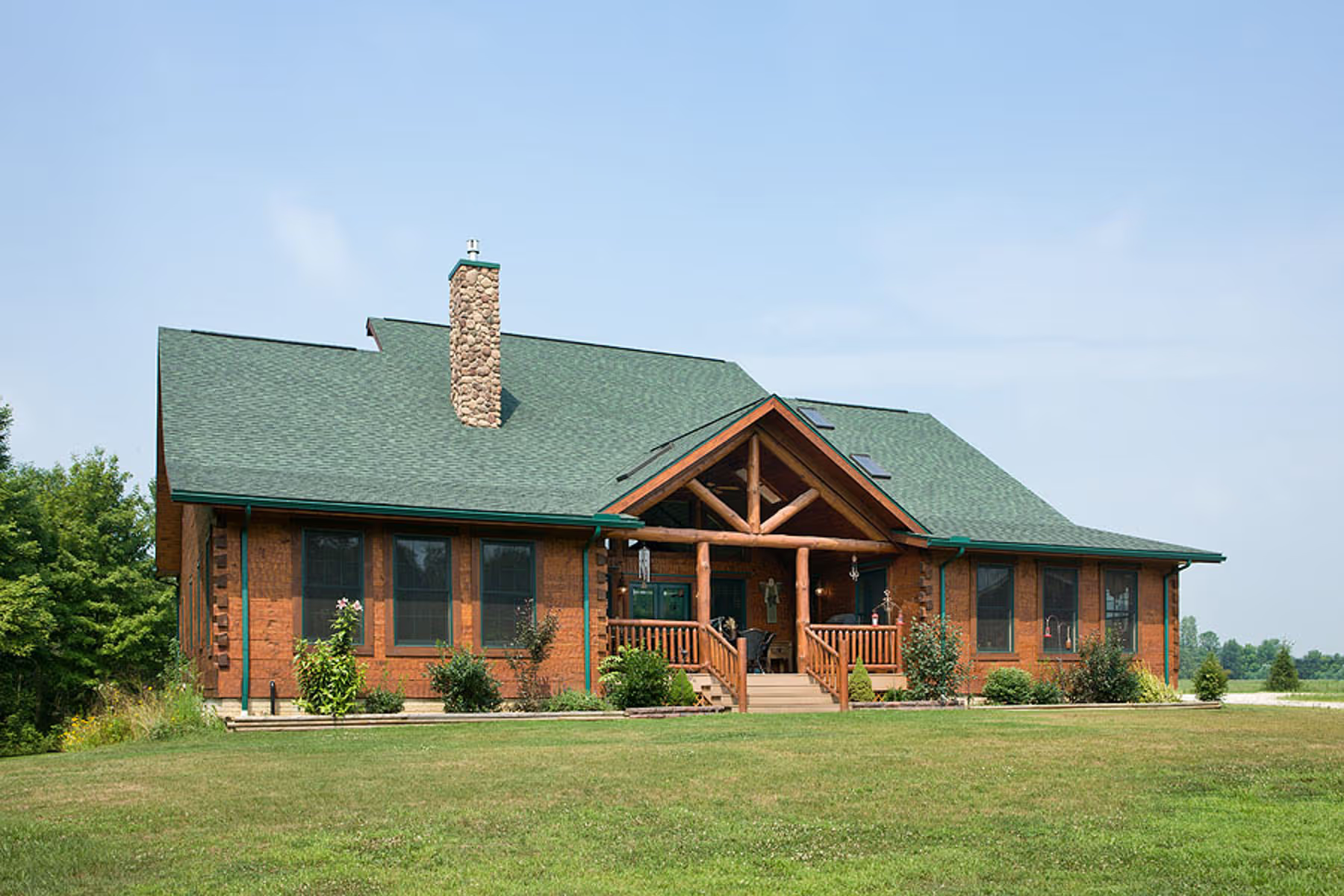
If you’re still planning your home, roof overhangs and porches can do some of that protecting. Wider overhangs and porches on south- and west-facing walls cut the sun and rain that reach the logs. Read our design tips that reduce log home maintenance before you finalize a plan.
Annual Log Home Maintenance Packages
For homeowners who want to hand off the work, Pine Lane Staining offers maintenance packages for Ohio log homes at $100 to $150 per month, depending on the size of the home.
“We offer a program where we come back out once a year and we wash your house and just keep it stained and maintained,” Raber says. “We’ll take care of your house.”
What 20 Years of Upkeep Looks Like
Hochstetler Log Homes has milled log homes for 40 years. Our Summer 2026 newsletter featured client homes that are close to 20 years old or older:
| Home | Year built |
|---|---|
| McKay model | 2003 |
| Kowatch home | 2005 |
| Billing home | 2005 |
| Vermont barn | 2006 |
| Black Fork model | 2007 |
| Rebman home | 2007 |
| Livengood home | 2008 |
| Mann home | 2008 |
| Gomez home | 2009 |
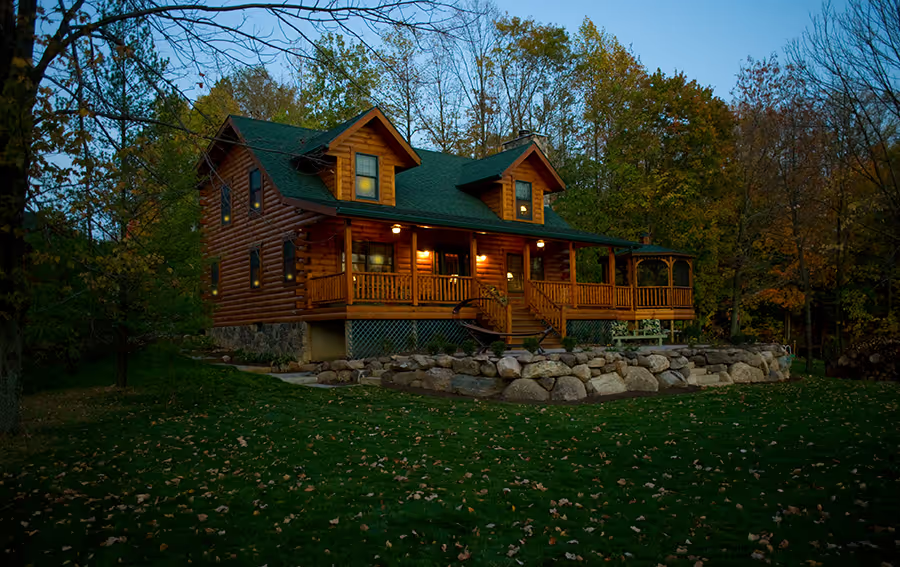
See more finished homes, new and old, in our project gallery.
For log home treatment or staining, call Pine Lane Staining at 330-557-9685. For questions about our logs or designing a lower-maintenance home, call Hochstetler Log Homes at 800-368-1015.